Drain Cleaning in Dover Borough, PA: Why Old Lines Act Up
Drain cleaning Dover Borough, PA is mostly a conversation about age. The borough core around the square and Canal Street holds the oldest homes in our service area, and their drain systems were built for a different era: cast iron soil stacks, clay joints running out to the street, and basement floor drains set into stone or block. A clogged drain in Dover Borough often comes back because the pipe itself, not just the clog, is part of the problem, so a drain cleaner here reads the house first: which decade it was built, what the stack is made of, and where the original clay still sits. Common searches for this part of Dover are drain cleaner Dover Borough and clogged drain Dover Borough, and both start the same way: a short call describing what the drain is doing.
The pattern we see most is the repeat visit to the same fixture, and each one is telling you something about the pipe, not just the blockage.
The Homes Here in Dover Borough, PA
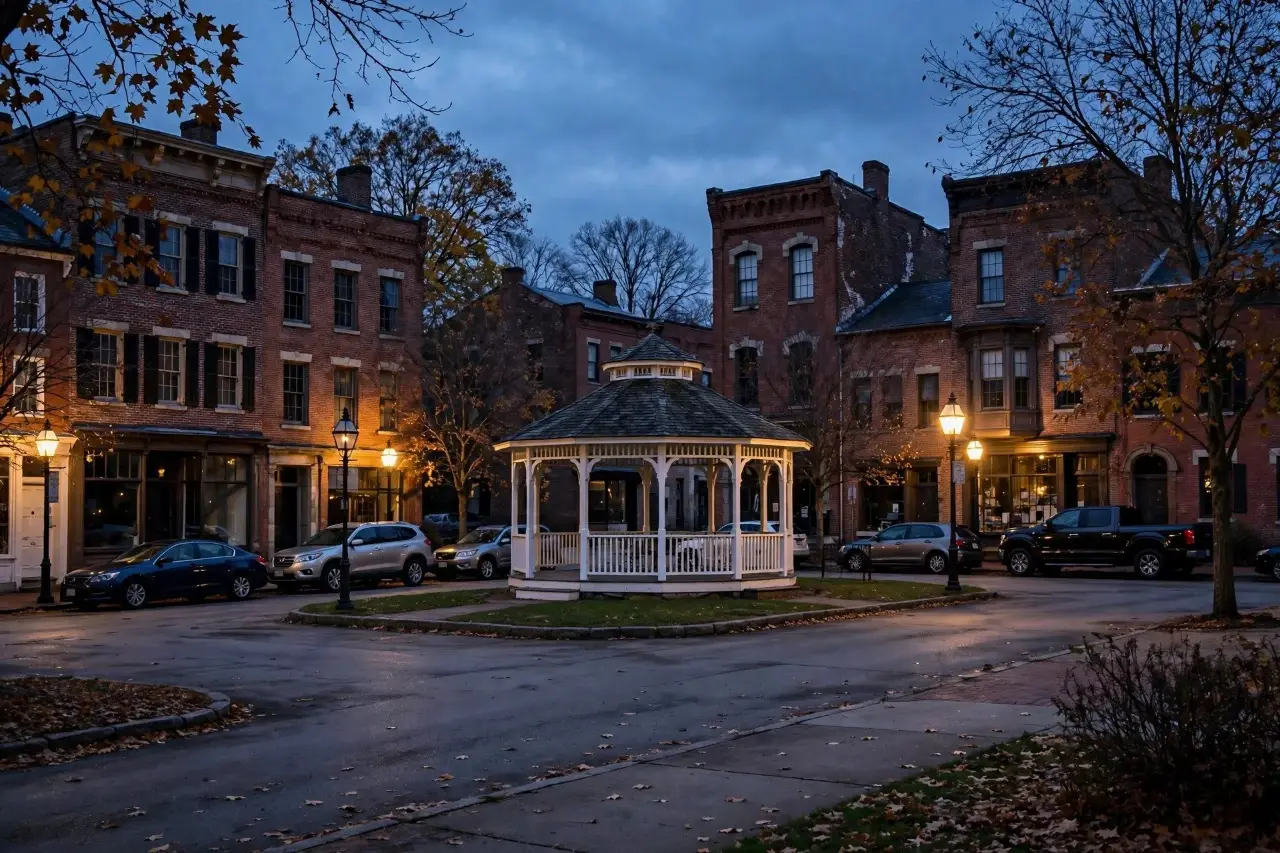
The streets around the square and along Canal Street are lined with the borough's original housing stock: brick and frame homes from the 1880s through the 1930s, many built as twins or narrow singles on tight lots near the sidewalk. Kitchens tend to sit at the rear of the house, bathrooms stack above them, and nearly every home has a deep basement with stone or block walls. That basement is where the whole story lives. A cast iron soil stack runs down the wall, branches pick up the kitchen and bath, and a clay lateral leaves the foundation and runs under the front walk or side yard out to the street, usually a short run by modern standards.
Inside, the layouts are compact. Sinks, tubs, and toilets sit close together on short branch lines, which means one sluggish branch can affect two fixtures at once. Basements double as laundries, with a standpipe or slop sink draining into a floor drain nearby, and those floor drains are often the original ones, set decades ago. Mature shade trees line the streets and many side yards, and their roots have had generations to explore the soil around old clay joints.
Additions tell their own story. Plenty of borough homes gained a second-floor bath or an extended kitchen long after they were built, and those newer branches tie into the original stack with long horizontal runs that move water slowly. Winter adds its own pressure: deep frost and freeze-thaw cycles stress buried clay, and cold-weather backups show up when a line that was already narrowed by scale or roots gets one more reason to slow down. The blocks near the square carry the oldest pipe in our service area.
What Usually Goes Wrong Here
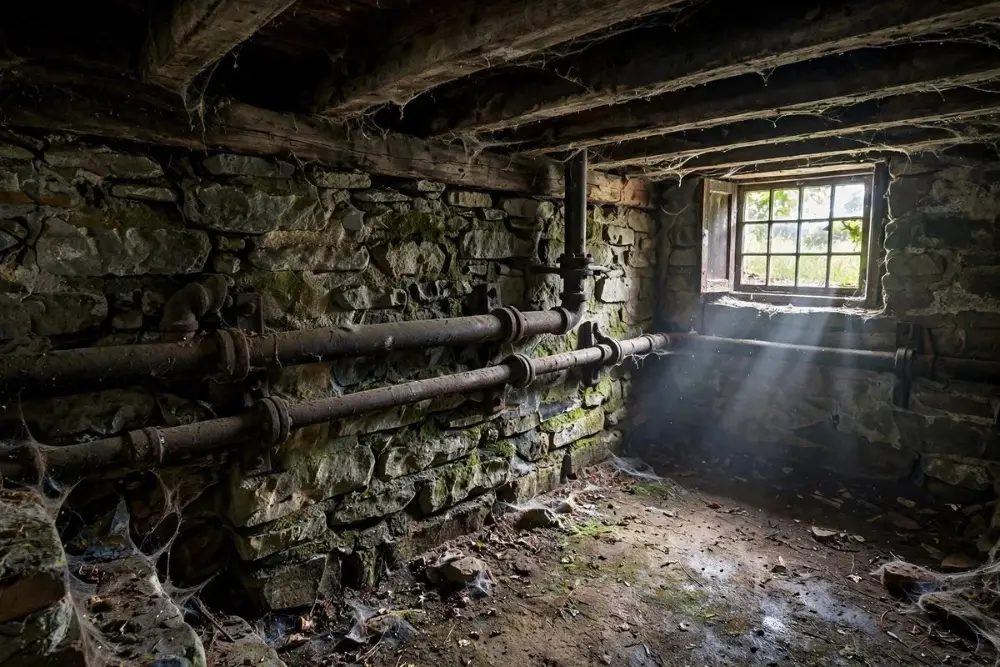
The first thing to understand about borough drains is that cast iron does not stay smooth. Decades of water wear roughen the interior, and that rough surface grabs grease from the kitchen and soap from the bath. A newer PVC line can shrug off a little grease; an old cast iron branch holds onto it and builds a narrowing layer that catches everything behind it. That is why kitchen drain cleaning is one of the most common calls in the borough: a short branch built for a quieter kitchen now carries a modern household's cooking and cleaning.
Bathrooms tell a similar story. Hair and soap scum settle into rough old tub and sink drains, and the short shared branches of a stacked bath mean a slowdown at the tub often shows up at the sink too. When one fixture misbehaves while the rest of the house is fine, bathroom drain cleaning at that branch is usually the right call.
Outside the foundation, the clay lateral is the quiet troublemaker. Joints that were sound years ago can shift and open, and roots from those mature street and yard trees find the moisture. A root intrusion rarely announces itself early, and it tends to come back after a simple clearing because the opening is still there. When several fixtures back up at once, or water rises in the basement floor drain when the washer runs, that points past the branches to the lateral, and main drain line cleaning with a camera to find the entry point is the honest approach.
What the Technician Checks First in a Dover Borough Home
The visit starts with questions, not tools. Which fixtures are affected, when it started, and whether the problem comes back on a schedule all point the technician toward a branch line or the main lateral before anyone touches a wrench. Then comes the basement, because in a borough home the basement shows everything: the stack's material and condition, where branches tie in, whether a cleanout is reachable, and where the lateral leaves the wall.
Next the technician maps the outside mentally: where the big trees stand, which way the lateral runs to the street, and whether the ground shows the settling that follows old clay. If the symptoms point to the main line, a camera goes in through the cleanout to find roots, separations, or heavy scale, because clearing without seeing is how a borough home ends up on a twice-a-year schedule. The fix follows what the camera finds: cabling for soft blockages, jetting to scrub a roughened interior, or a camera-guided clearing that targets the exact joint roots are using.
The technician will not guess at what the camera can confirm: taking time to look first is what keeps the work honest.
Old borough pipe rewards a tech who has seen it before. Describe your house by phone and the visit starts with the right cable, camera, and cleanout plan.
What a Call Looks Like, Start to Finish
01
You call. A real person answers, any hour, and asks what is happening: which fixtures, how long, and whether it has happened before.
02
A few questions. You describe the symptoms and the house, roughly how old it is and whether there is a basement cleanout. That is enough to send the right technician with the right equipment.
03
A local tech is dispatched. Someone who has worked in borough basements before looks first, and lays out options with pricing explained before any work begins.
04
The work and the explanation. The drain is cleared, and the technician tells you what was found and what to watch for, so the next call is your choice, not a surprise.
Nearby Areas and Related Services
The borough is the old core, and the township wraps right around it. If you are just outside the borough line, see drain cleaning in Dover Township for homes with longer runs and mixed pipe eras. Along the Carlisle Road corridor toward York, drain cleaning in Weigelstown covers the mid-century subdivisions and newer infill. And for an overview of everything we do across the area, start at drain cleaning dover and work outward from there.
Surrounding the borough: Dover Township for ranches, split-levels, and newer streets.
East along Carlisle Road: Weigelstown for post-war and newer homes.
On the borough edge or a newer block just outside it? Confirm your coverage by phone and book the visit in the same call.
Dover Borough Drain Cleaning FAQs
In the borough's older homes, the clog is often only part of the story. Cast iron interiors roughen with age and hold onto grease and soap, and clay joints can let roots back in within months. Clearing the blockage restores flow, but the pipe's condition decides how long that lasts.
Most often it sits in the basement, either on the main stack or on the lateral where it leaves the house. Some borough homes have it outside near the foundation, and a few have none that is easy to find. The technician will locate a workable access point when they arrive.
In most Dover Borough basements, yes: the floor drain usually ties into the same main lateral that carries everything out to the street. That is also why a backup at the lowest drain usually points to the main line rather than a single fixture.
Yes, cast iron is one of the most common materials technicians clear. Cabling works well on soft clogs, and jetting can scrub the rough interior back to a workable surface. The technician judges the pipe's condition first and chooses the method the pipe can handle.
Watch the lowest fixtures in the house. If one sink is slow while everything else drains fine, the problem is usually in that branch. If several fixtures gurgle or back up together, and water appears in the tub or floor drain when the washer runs, the main line is the likely culprit.
Skip chemical drain cleaners, since they can harm older pipes and make the technician's job harder. Cut back on water use if more than one fixture is backing up, and keep people and pets away from any backed-up water. Move valuables off the basement floor near the floor drain.
They can. Roots travel well beyond a tree's canopy in search of moisture, and on tight borough lots the trees that matter may belong to a neighbor or sit along the street. A camera inspection shows exactly where roots enter.
Yes, the whole borough core is covered, including the streets around the square and Canal Street. If you are unsure whether your address falls inside our service area, one call settles it.
Get Drain Cleaning in Dover Borough, PA Today
Old pipes, new pipes, or somewhere in between, a backed-up drain in the borough does not fix itself. Call now and a local technician will be on the way.
Call (717) 297-8227 nowCalls answered 24/7. Serving Dover, PA.