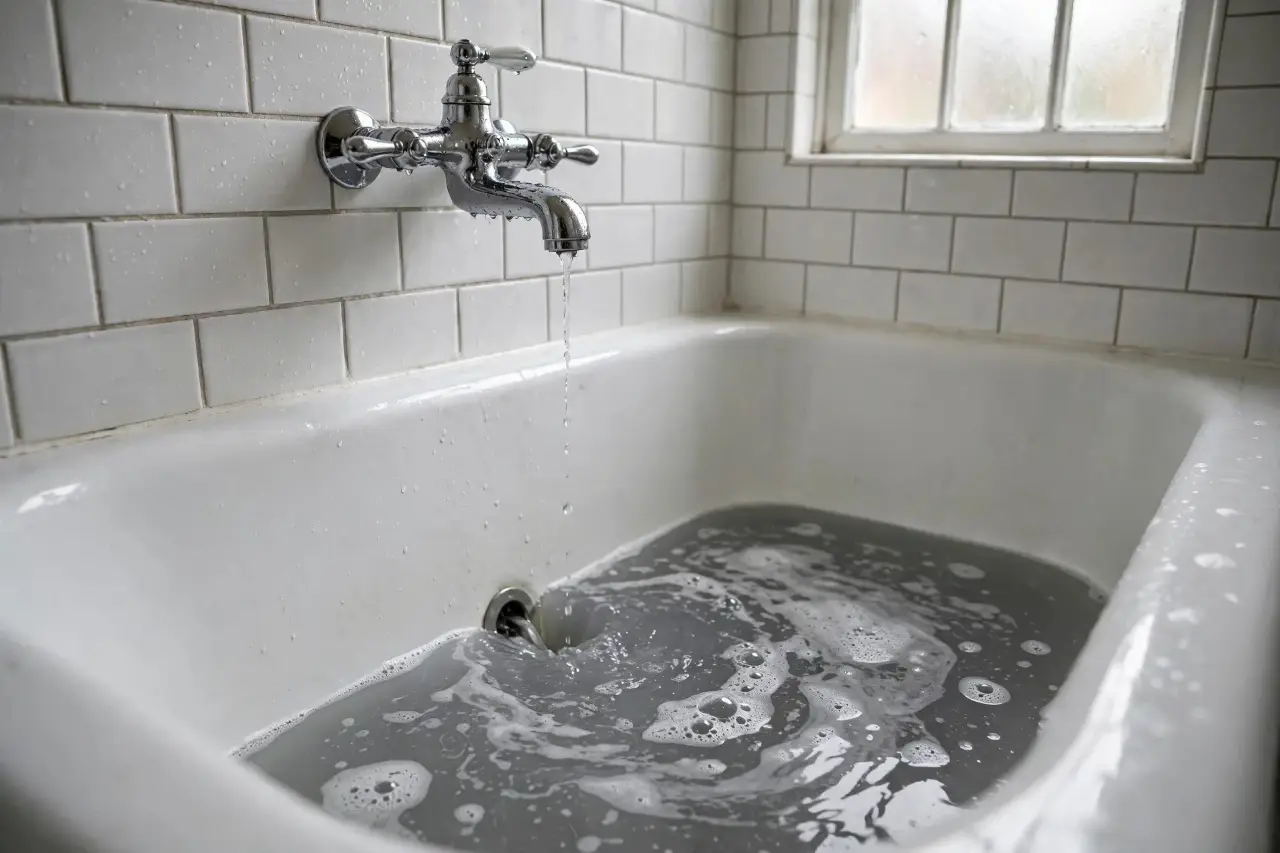
The short version
- Hair tangles with soap scum into a slow mat that a plunger cannot break apart.
- The technician clears the trap, the stopper assembly, and the line beyond, then runs water to prove it drains.
- Bathroom drain cleaning across Dover, PA with same-day slots where available and straight answers on the phone first.
A shower that leaves you standing in rising water is the classic sign you need bathroom drain cleaning in Dover, PA. Unlike kitchen clogs, bathroom clogs are almost never grease. They are hair and soap, woven together over months into a dense mat that clings to the trap and the first stretch of pipe. Water still gets through, just slower every week, until the drain effectively gives up.
The good news is that bathroom clogs are usually close to the fixture and straightforward to clear. The visit starts at the drain you can see: the strainer, the pop-up stopper, the overflow plate. Most of the time the trouble is right there. When it is not, the technician follows the line downstream until the water runs the way it should.
Hair and soap scum: the slow clog behind most bathroom drain cleaning in Dover
Every shower sheds hair, and bar soap leaves a waxy film on everything it touches. Together they form a felt-like mat that wraps around the strainer, packs into the trap, and creeps down the line. A clogged shower drain rarely happens overnight; it is the end of a long, quiet buildup.
Liquid body wash is gentler on drains than bar soap, but it does not prevent the mat, it only slows it. Long hair clogs faster than short hair, and households with several people sharing one shower reach the tipping point sooner. None of this is a plumbing defect. It is simply what bathroom drains collect, and clearing it is routine work.
What does not work: pouring chemical drain cleaner into a slow shower drain. The chemical sits on top of the hair mat, generates heat, and can damage the finish and the piping while leaving the mat intact. Pulling visible hair off the strainer is the only home step worth taking.
Pop-up stoppers and tub overflows: the small parts behind a slow bathroom sink
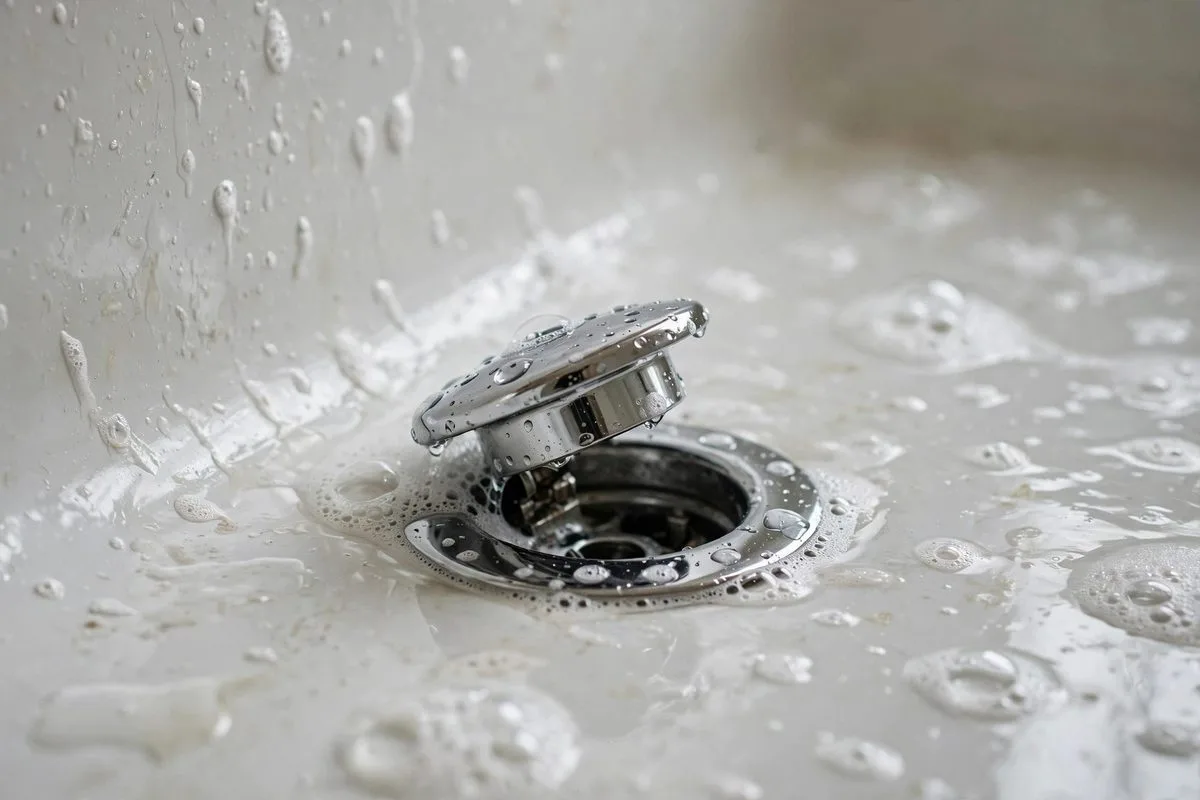
A slow bathroom sink is often not a pipe problem at all. The pop-up stopper assembly collects hair and toothpaste residue around its pivot rod, and the linkage slowly stops seating properly. The technician pulls the stopper, cleans the assembly, and the sink drains like new, with no cable required.
Tub overflows matter more than they look. The overflow plate covers the opening that lets a tub drain air, and on older tubs the linkage behind it corrodes or slips. A tub that drains slowly with the stopper up, but fine when you fiddle with the overflow lever, is telling you the mechanism needs attention, not the line.
These are the parts of the job where a careful hand matters. Stoppers and overflow plates come off and go back on without marring the finish, and the technician checks the seal before leaving so the tub holds water for the next bath.
Old metal drain lines in Dover's older homes
In homes with original cast iron or galvanized drain lines, the inside of the pipe is no longer smooth. Years of water and soap roughen the metal, and that roughness grabs hair far more aggressively than a new pipe would. A bathroom that needed clearing once a decade can start needing it every year or two as the line ages.
The roughening also shrinks the working diameter of the pipe. Buildup layers onto buildup, and the line that once carried a full shower flow now carries half of one. Clearing restores the opening, but the underlying texture remains, which is why older bathrooms clog on a shorter cycle than newer ones.
This is not a verdict on the house. Many of these lines still have years of service in them. It just means bathroom drains in an older home deserve quicker attention at the first sign of slowing, before a partial clog becomes a full one.
When a tub drain clog is really further down the line
Sometimes the tub is innocent. If the toilet gurgles when the tub drains, if the shower backs up when the washing machine runs, or if several fixtures slow down together, the restriction sits downstream of the bathroom, in the branch or the main line. Clearing the tub trap in that situation buys hours, not weeks.
The tell is the pattern. One slow fixture means a local clog. A group of misbehaving fixtures means a shared line is narrowing. When you describe the pattern on the call, the technician arrives with the right equipment instead of discovering the real problem halfway through the visit.
A bathroom-wide problem that reaches past the branch is a main drain line cleaning job, and we will say so plainly rather than clearing the same tub twice. When buildup coats a long stretch of line, hydro jetting scours it in a way a cable cannot.
What the technician checks on a bathroom call
The visit follows a short, logical order. First the visible parts: strainer, stopper, overflow plate. Then the trap, which on tubs and showers is reached through an access panel or from below. Then the line beyond, with a small cable that follows the drain's path without opening walls.
At each step the technician runs water and watches. A drain that takes water at full flow is done; a drain that still hesitates gets the next step downstream. You see the result in real time, because the proof is water going down, not a tool going in.
If the line beyond the bathroom resists clearing, that is the moment for a camera rather than a bigger cable. Seeing the restriction beats guessing at it, and it is how repeat bathroom clogs finally get a real explanation.
Dover homes and bathroom drains: what the tech expects to find
The borough's older homes carry the classic bathroom setup: cast iron tub and shower drains, original tile, and stopper mechanisms that have been working since before most of us were born. Hair has had decades to find every rough spot in those lines. A slow tub in a borough bathroom is rarely a surprise, and it is rarely complicated either.
In the township's ranch homes and Weigelstown's split-levels, the bathrooms are newer but the pattern is familiar: one well-used family shower doing the work of three people, bar soap, and a strainer that has not been lifted in months. These lines are usually smooth inside, which means the clog sits close to the fixture and clears quickly.
Out toward Davidsburg and the newer subdivisions, big soaking tubs with wide drains still slow down the same way, because the cause is hair, not pipe size. Wherever the bathroom sits, we connect you with pros who cover drain cleaning in Dover Township and drain cleaning in Conewago Township with techs who know which era of bathroom they are walking into.
Shower going ankle-deep again? Check availability in Dover and get a straight answer about whether this is a stopper, a trap, or something further down.
While you wait: before the tech arrives
If the tub is backing up into the shower or the toilet is involved too, skip the wait and get upfront pricing on the phone. Multi-fixture trouble is prioritized where available.
Bathroom drain cleaning questions from Dover homeowners
A clogged shower drain almost always starts with hair tangling around the strainer and soap scum gluing it into a mat. The mat lets some water through, so the drain slows gradually instead of stopping. Clearing the trap and the first stretch of line restores full flow.
Pulling hair off the strainer or out of the stopper area is fine and often helps. Pushing a tool deep into the line can pack the clog tighter or scratch a finished tub surface. If the drain still runs slowly afterward, the blockage is deeper than a surface tool can reach.
The fixtures share drain and vent piping, so a flush pushes air through the system. When a line is narrowing downstream, that air escapes through the tub drain as a gurgle. An occasional gurgle is just noise, but a new or worsening gurgle is worth a call.
Yes, when more than one fixture is involved. A slow tub plus a gurgling toilet, or water backing up in the shower when the washer drains, points past the bathroom to the main line. The technician checks the pattern first so you do not pay to clear the wrong pipe.
No. Stoppers, strainers, and overflow plates are removed and refitted by hand, and the work happens inside the drain, not on the visible finish. If access requires anything unusual, the technician explains it before starting.
Older metal drain lines roughen on the inside over the years, and that roughness catches hair and soap the way a smooth new pipe does not. Decades of buildup also shrink the effective opening. The pipe can still serve for years, but it needs clearing more often.
There is no fixed schedule. Cleaning hair from the strainer regularly goes a long way. If a drain keeps slowing within weeks of clearing, that is a symptom to investigate with a camera, not a calendar item.
Call back right away and say exactly what came back and where. Return flow usually means the restriction is deeper than the first clearing reached, or that a second problem sits downstream. A camera inspection finds which one it is.
Bathroom drain cleaning in Dover, PA, without the wait
Call Dover Drain Cleaning Co. at (717) 297-8227 for bathroom drain cleaning in Dover, PA. Slow showers, stubborn tubs, and tired sinks get cleared, with same-day slots where available and the cause explained before the tech leaves.
Calls answered 24/7