The short version
- A cable bores through a clog. A jetter washes the pipe walls clean of grease, scale, and roots.
- The technician checks the line with a camera first. Fragile or broken pipe should not be jetted.
- Hydro jetting in Dover, PA for repeat clogs that cabling only fixes for a while.
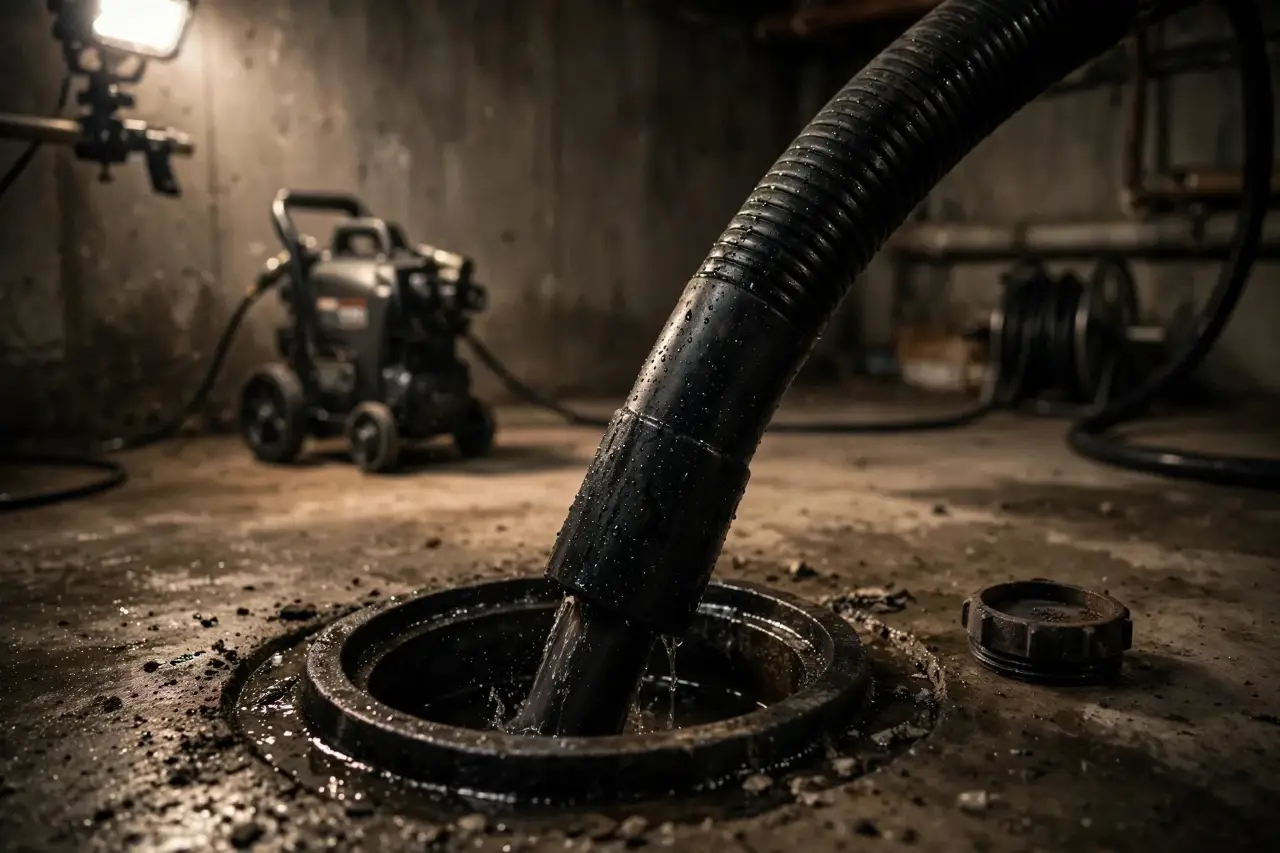
Hydro jetting in Dover, PA uses high-pressure water to scour the inside of a drain line, not just punch through the blockage. A specialized nozzle on the end of a hose sprays water backward and forward as it travels the pipe, washing grease, scale, and roots off the walls and flushing the debris downstream. It is the deepest clean a drain line can get without opening it up. People often call this water jetting sewer line work, but on this site it means clearing the main drain line to the cleanout, not excavation or replacement.
Jetting is not the first tool for every clog. A simple blockage gets a cable, which is faster and all the line needs. Jetting earns its place when the problem is the condition of the pipe walls themselves: heavy grease coating, mineral scale, or root masses that a cable pierces but leaves behind. If your line keeps clogging within weeks of a cable clearing, that pattern is exactly what hydro jetting drain cleaning is for.
What hydro jetting in Dover actually does inside your drain line
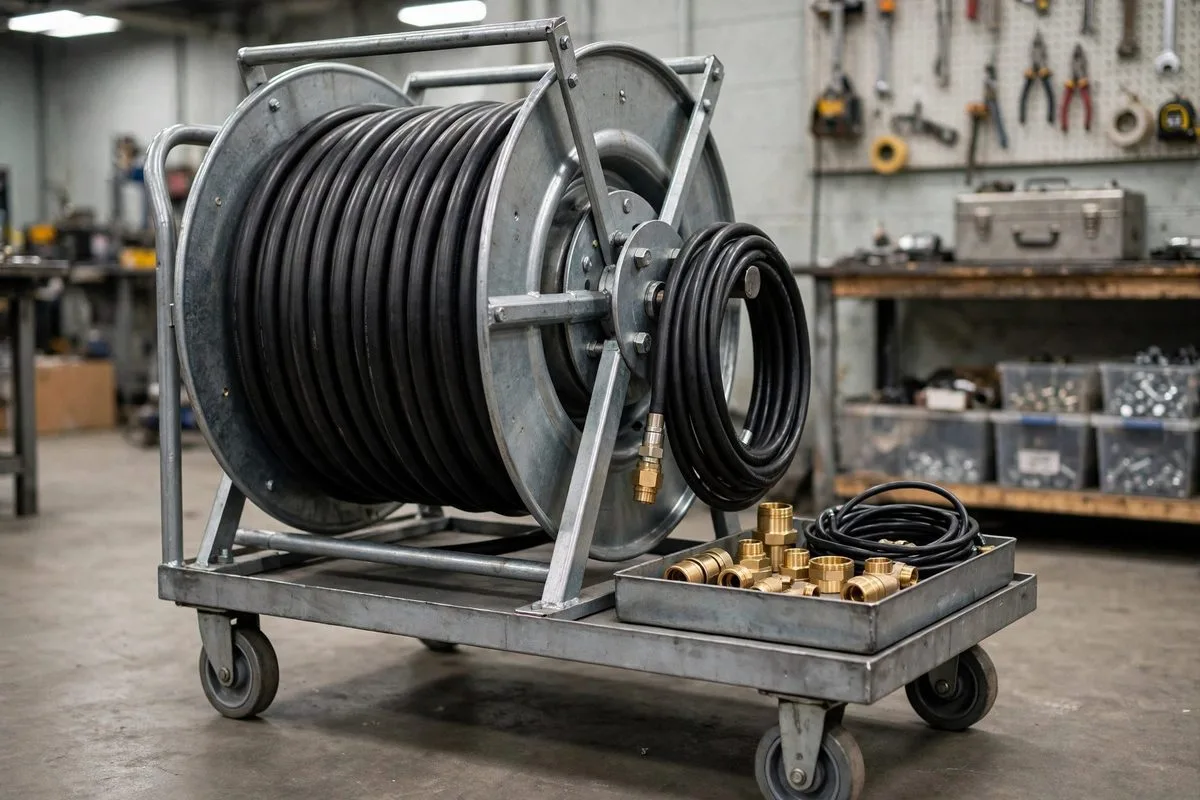
The jetter is a pump on a reel of high-pressure hose, with a nozzle chosen for the job: a penetrating nozzle to open a path, a flushing nozzle to wash the walls, a root-cutting nozzle with spinning jets for intrusions. Water pressure does the work that a steel cable does by force, but across the full circumference of the pipe.
As the nozzle advances, rear-facing jets pull the hose forward and wash debris back toward the cleanout, while forward jets break up what lies ahead. The technician works the nozzle back and forth along the coated section until the camera shows clean walls. The line is then flushed at full flow to carry everything out.
The result is a line returned close to its original diameter. A cable leaves a bored hole through the clog with residue on the walls; water jetting a sewer line removes the residue itself. That difference is why jetting holds longer on grease and scale problems.
Jetting vs cabling: which one your line needs
Think of it this way: cabling is surgery, jetting is a deep clean. A cable is the right call for a discrete blockage, a wad of paper, a sudden stoppage, a first-time clog. It opens flow quickly and costs less. Jetting is the right call for a condition: walls coated in grease, scale narrowing an old line, roots matted along a joint.
Many jobs use both in sequence. The cable opens the blockage so the camera can see, the camera maps the condition of the walls, and the jetter does the deep clean the cable cannot. A technician who recommends jetting should be able to show you the camera footage that justifies it.
The comparison below sums up the honest trade-offs. Neither tool is better in the abstract; the line decides.
Grease, scale, and root build-up: what jetting removes
Grease is jetting's most common target. Years of cooking grease plate the inside of kitchen and main lines in layers a cable can pierce but not remove. The jetter's flushing action peels those layers off and carries them out, which is why jetting grease and roots together is the standard prescription for repeat kitchen-line clogs.
Scale is the quieter one. Hard water leaves mineral deposits inside older metal pipe, roughening the walls and shrinking the opening. A cable rattles through scale; a jetter strips it. On old cast iron with heavy scaling, jetting can restore flow the cable never could.
Roots are the third target, and the one where honesty matters most. Jetting cuts roots cleanly off the pipe walls, but it does not close the joint or crack they entered through. Expect the roots to return on nature's schedule unless the pipe itself is addressed. The camera footage after jetting shows you exactly what remains.
When hydro jetting in Dover is not the right call: fragile or broken pipe
High-pressure water is a powerful tool, and powerful tools have limits. Jetting is not suitable for pipe that is cracked through, collapsed, or so corroded that the walls are thin. Pressurized water in a broken line can wash soil from around the pipe and make a bad situation worse.
This is not a judgment call made blind. The camera inspection before jetting exists precisely to find these conditions. If the video shows a break, a belly full of standing water that indicates a sag, or walls flaking apart, the technician will tell you jetting is off the table and explain what the alternatives are.
No honest operator claims jetting is safe for every pipe. The ones who jet first and look later are the ones who find out about broken pipe the expensive way. Camera first is the rule, and it protects your line and your wallet alike.
Camera first, then jet: the order that protects your line
The sequence matters. First the line is opened with a cable so water and camera can pass. Then a drain camera inspection maps the walls: grease, scale, roots, cracks, bellies, breaks. Then, and only then, the jetter goes in with the right nozzle for what the camera found.
This order does two things. It keeps jetting away from pipe that cannot take it, and it gives you before-and-after proof. You see the coated walls on the monitor, then you see them clean. Nobody has to take anyone's word for what the money bought.
After jetting, the camera often goes back in for a final look. That pass confirms the walls are clean and shows the true condition of the pipe underneath the buildup, which is the information that actually plans the line's future.
Dover homes and jetting: where the deep clean pays off
In the borough's older housing, jetting pays off on grease-laden kitchen branches and scaled cast iron mains. These lines have had decades to coat, and a cable has been piercing the same buildup for years. One proper jetting, camera-verified, often breaks a cycle of repeat clogs that cabling alone could not.
In Weigelstown and the township subdivisions, the jetting calls skew toward roots. Post-war and later homes with mature landscaping send roots into every joint they can find, and the long main runs across bigger lots give roots plenty of pipe to colonize. Jetting shears the mats off; the camera shows which joints to watch.
Davidsburg's newer homes need jetting least often, but they are not exempt. A long kitchen branch with low spots, or a main with a belly that holds water, will coat regardless of the pipe's age. we connect you with pros who handle drain cleaning in Davidsburg and drain cleaning in Dover Township with the same rule everywhere: the camera decides whether jetting is right.
Clogged again weeks after a cable clearing? Check availability in Dover and ask whether your line is a jetting candidate. The camera will give us both the answer.
While you wait: before the tech arrives
Wondering if your line qualifies? Call before it gets worse. Describe the repeat pattern and we will tell you honestly whether jetting fits.
Hydro jetting questions from Dover homeowners
Not always, which is why the line gets a camera check first. Jetting is skipped when the pipe is fragile, cracked, or broken. On sound pipe, even older pipe, it is a standard cleaning method. The camera decides, not the calendar.
Yes, a jetter with a root-cutting nozzle shears roots off the pipe walls and flushes them out. Like cabling, it clears the intrusion without repairing the joint or crack the roots entered through. A camera check after jetting shows what the roots were getting into.
It depends on the pipe and what goes down it. A sound line that stays clear of grease and roots holds its cleaning far longer than a cracked line under a maple tree. The technician talks through what to watch for after the visit.
They do different jobs. A cable bores through a blockage to restore flow; a jetter scours the pipe walls to remove the buildup itself. For a one-time clog, cabling is usually enough. For repeat clogs from grease, scale, or roots, jetting is the deeper clean.
Usually the jetter enters through a cleanout or another large drain opening, because the hose and nozzle need room to work. Branch lines can sometimes be jetted from a fixture opening. The technician picks the entry point that gives the hose a straight run at the buildup.
Less than most people expect. The equipment is self-contained, the work area is protected before the hose goes in, and everything is cleaned up after. The water goes into the line, not onto your floor.
Because high-pressure water should never go into a line blind. The camera finds cracks, breaks, bellies, and fragile sections before the jetter starts. If the pipe cannot take jetting, you find out from a video, not from a failure.
There is no fixed schedule. Most jetting calls come after repeat clogs that cabling only temporarily fixes. If a line keeps slowing within weeks of a cable clearing, that is the signal jetting is worth discussing.
One more thing worth knowing: a freshly jetted floor drain cleaning line in the basement often drains noticeably faster too, since the main it ties into is finally clear.
Hydro jetting in Dover, PA, for lines that keep clogging
Call Dover Drain Cleaning Co. at (717) 297-8227 for hydro jetting in Dover, PA. Camera first, honest advice about whether your line qualifies, and walls washed clean when it does.
Calls answered 24/7