The short version
- Lint, soap residue, and sediment narrow laundry and floor drain lines until they cannot keep up.
- A floor drain that backs up with other fixtures running usually signals the main line, not the drain itself.
- Floor drain cleaning in Dover, PA with same-day slots where available and techs who know basement setups here.
When water comes up through the basement floor, floor drain cleaning in Dover, PA starts with one rule: stop using water. The floor drain is the lowest opening in the house, which makes it the messenger for problems elsewhere. A slow floor drain on its own is a local clog. A floor drain that backs up when the washer or the upstairs shower runs is reporting on the main line.
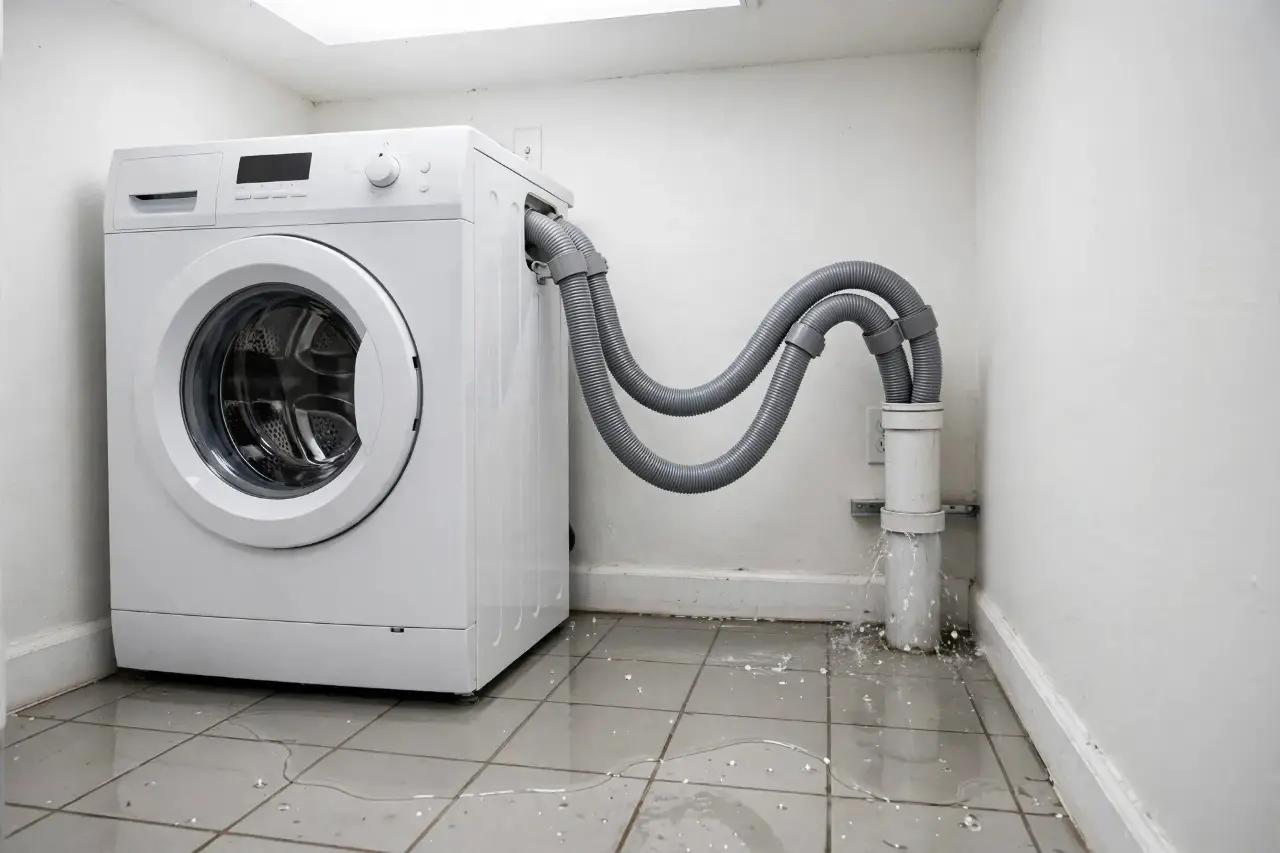
Laundry drains have their own personality. A washing machine discharges a large volume of water very quickly, and the standpipe line has to swallow all of it at once. When lint and soap residue narrow that line, the washer wins the race and water spills over the top of the standpipe. A laundry drain backing up and a standpipe that overflows are both routine work, and both get worse if ignored.
Why your laundry drain keeps backing up: lint and standpipe overflows
Every load of laundry sends lint down the discharge hose. A mesh lint trap on the hose catches most of it, but plenty gets through, and lint combined with soap residue forms a dense mat inside the standpipe line. The line narrows a little with every load until one day the washer's discharge overwhelms it.
A washing machine drain overflow is unmistakable: water pouring over the top of the standpipe during the drain cycle, sometimes running down the wall behind the washer. The washer is not broken; the line simply cannot accept water as fast as the pump delivers it. Clearing the line restores the capacity the washer was designed around.
Standpipe height and diameter matter, and older laundry setups were built for gentler machines. If your washer is newer than the plumbing behind it, the mismatch alone can cause overflows even in a clean line. The technician checks the line first, then tells you honestly whether the setup itself needs attention.
Basement floor drain clogs: why the lowest drain backs up first
Gravity makes the floor drain the canary. When the main line restricts downstream, wastewater from every fixture above has to go somewhere, and the lowest opening in the house is the path of least resistance. A basement floor drain clog that appears during laundry day or after showers is rarely about the floor drain at all.
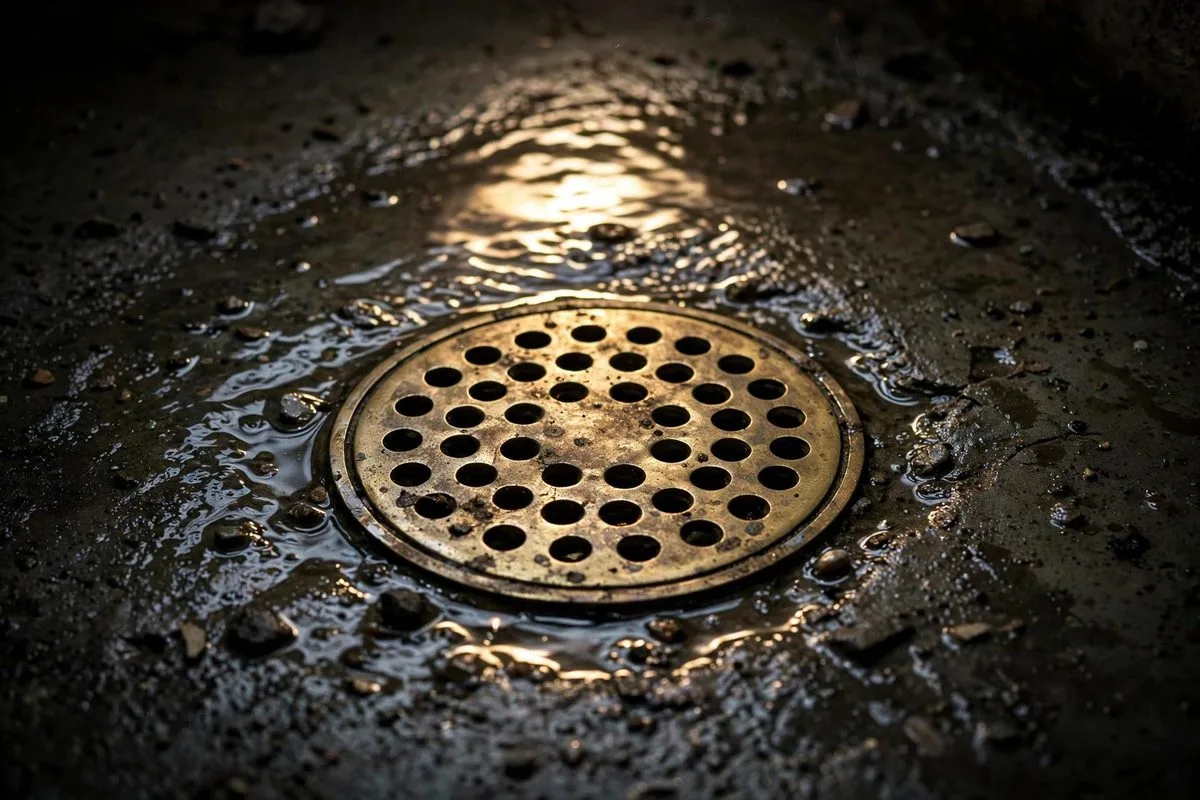
The floor drain has its own local troubles too. Sediment, concrete dust, and debris wash into the grate over the years and settle in the trap. Utility sinks draining into the same line add their share. A floor drain that is slow on its own, with everything else in the house fine, usually just needs its own line cleared.
Telling the two apart is the technician's first job. The question is always what else was running when the backup appeared. One fixture plus the floor drain points local; the whole house plus the floor drain points to the main.
Dried-out traps and that basement smell
Every drain has a trap holding a plug of water that blocks sewer gas. Floor drains in quiet corners of the basement can go months without seeing water, and the trap simply evaporates. The result is a musty, unpleasant odor that seems to come from nowhere and gets blamed on everything except the drain.
A drain that smells but otherwise works is usually just thirsty. Running water nearby, or the natural humidity of a basement laundry area, often keeps the worst of it at bay. But a smell that persists after the drain has seen regular water deserves a look, because a cracked trap or a venting issue smells the same as a dry one.
Do not try to fix a smelly floor drain with chemicals or by sealing the grate. Covering the drain traps the symptom and can hide a developing backup. If the smell will not quit, the drain is asking for attention, not air freshener.
Low-lying basements and storm-season backups
Heavy rain seasons test every low drain in the house. When the ground saturates, older lines with joints and cracks take on groundwater, and the extra volume has to go somewhere. Basements in low-lying blocks see this first: floor drains that behave all year start burping and backing up after sustained rain.
This is a tendency, not a forecast. No one can promise your basement will or will not back up in a given season. What is true in general is that lines already narrowed by roots or scale have less spare capacity when the water table rises, so a line that was coping in August can be overwhelmed in a wet spring.
If your floor drain only misbehaves in wet weather, say so on the call. The pattern points the technician toward infiltration and capacity rather than a simple clog, and the fix may involve the line's condition, not just its contents.
Backwater valves, explained in plain terms
A backwater valve is a one-way gate on the drain line. Water flowing out of the house pushes it open; water trying to flow back in slams it shut. For homes that have suffered backups, it is the difference between a scare and a flood, which is why people ask about it after their first bad backup.
It is a protective device, not a drain cleaner. It does nothing for a clogged line, and it needs the right setup: proper placement, access for maintenance, and a line it can actually protect. Some configurations cannot take one, and a valve installed in the wrong place causes more trouble than it prevents.
If backups keep finding your basement, ask the technician whether your line is a candidate. The answer depends on your pipe layout, your backup history, and what the camera shows. It is a conversation, not a product pitch.
Dover homes and low drains: what the tech expects to find
Basements are the norm across Dover, and that means floor drains are everywhere: in borough homes where the drain has served since the house was built, in Weigelstown ranches where the laundry sits in the basement, and in Davidsburg homes where the utility corner holds the washer, the water softener, and the floor drain in one wet neighborhood.
The borough's older floor drains tie into old lines, and the two age together. Sediment and decades of wash water narrow the trap and the first stretch of pipe, so a drain that handled everything in 1980 starts burping in 2026. In the post-war subdivisions, the laundry setup is the story: original standpipes meeting modern high-efficiency washers that discharge faster than the old line was sized for.
Out west toward Davidsburg and the township's newer streets, floor drains are usually fine and the trouble is the main they tie into, especially on larger lots with long runs and mature trees. Wherever the low drain sits, we connect you with pros who handle drain cleaning in Dover Borough and drain cleaning in Davidsburg, and we check the main whenever the floor drain's story involves the rest of the house.
Washer overflowing or floor drain burping? Get Dover help today and describe what was running when it happened. That detail diagnoses half the call.
While you wait: before the tech arrives
Water spreading across the basement floor? Describe the problem, we will dispatch. Backups get priority where available.
Floor and laundry drain questions from Dover homeowners
A washing machine drain overflow usually means the standpipe line is restricted with lint and soap residue, so the washer pumps water in faster than the line can carry it away. Modern washers discharge a large volume quickly, and an older or narrowed line cannot keep up. Clearing the line restores the capacity the washer expects.
The usual cause is a dried-out trap: the water seal that blocks sewer gas evaporates when the drain sits unused. Floor drains in utility corners can go months without water. If the smell persists after the drain has seen water, the trap or vent may need a technician's look.
The floor drain is the lowest opening in the house, so it is where a restricted main line shows itself first. Water from upstairs fixtures hits the restriction and comes back up through the lowest point. Stop using water and call; this pattern usually means the main line needs attention.
Often, yes where a slot is open. Many floor and laundry drain calls can be scheduled quickly where a slot is open, and backups are prioritized where available. Call and describe what you are seeing; the dispatcher will tell you honestly what the day looks like.
Often, yes. A floor drain that backs up while other fixtures run is the classic sign of a main line restriction downstream. A floor drain that is simply slow on its own may just need its own line cleared. The pattern across the house tells the technician which one it is.
It is a one-way valve installed on the drain line that lets water flow out of the house but closes if flow tries to come back in. It is a protective device for homes prone to backups, not a drain cleaner. Ask the technician whether your line is a candidate; it does not suit every setup.
Absolutely. Lint combines with soap residue into a dense, felt-like mass that narrows the standpipe line over time. It is one of the most common causes of laundry backups we see. A mesh lint trap on the discharge hose catches most of it before it reaches the line.
No chemicals, and no objects meant to mask a smell. Chemical cleaners will not clear a floor drain restriction and they endanger the technician. If the drain smells, runs slowly, or backs up, it needs a visit, not a product.
When the backup will not wait for morning, emergency drain cleaning line is answered around the clock. And if the kitchen sink is part of the story, kitchen drain cleaning covers that end of the house.
Floor drain cleaning in Dover, PA, before the basement floods
Call Dover Drain Cleaning Co. at (717) 297-8227 for floor drain cleaning in Dover, PA. Same-day slots where available for backups and overflows, with the cause found and explained on the spot.
Calls answered 24/7