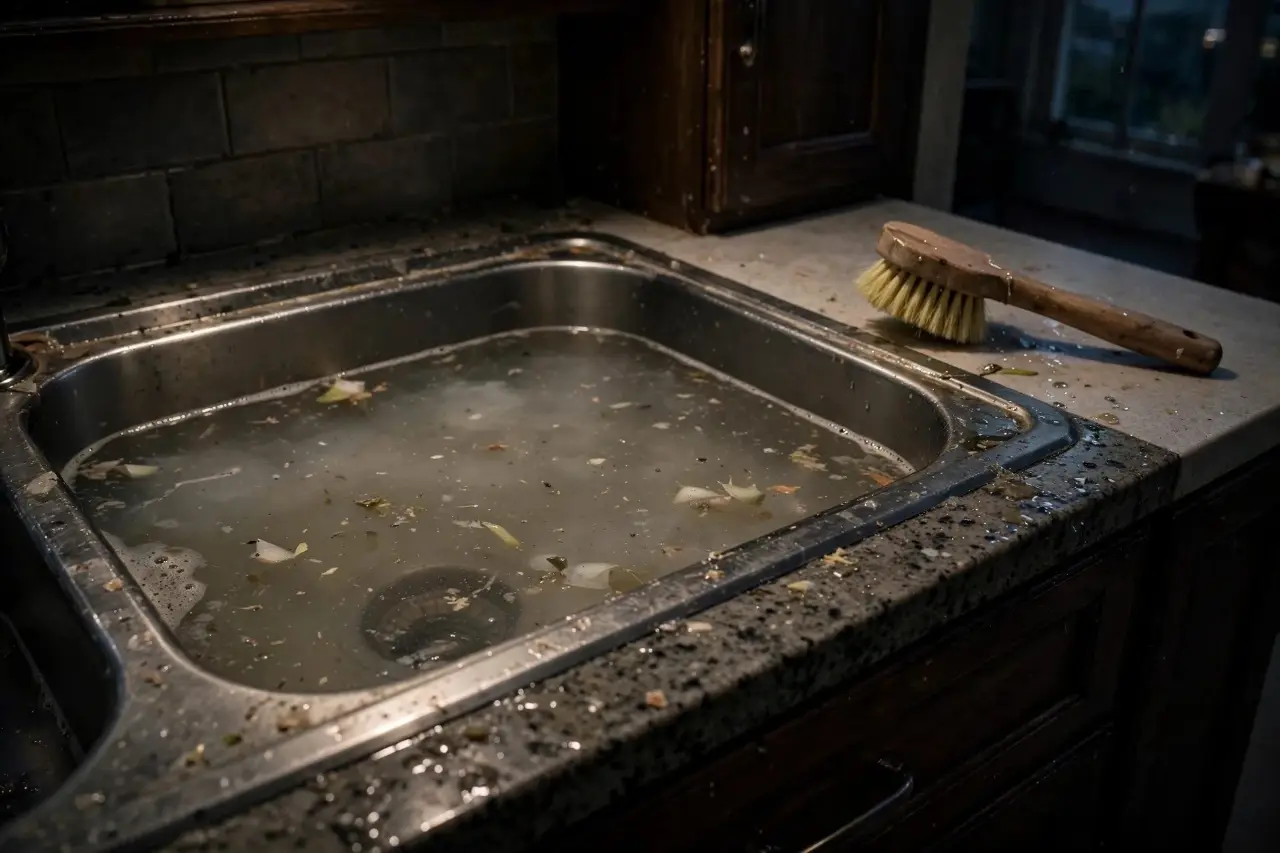
The short version
- Grease, starch, and disposal waste coat the kitchen branch line until water has nowhere to go.
- The technician clears the blockage, then checks the line behind the wall, not just the trap under the sink.
- Kitchen drain cleaning across Dover, PA, same-day where available, with the cause explained in plain words before the tech leaves.
A clogged kitchen sink brings the whole house to a halt. When you need kitchen drain cleaning in Dover, PA, the first question we ask is simple: is it one side of a double sink, or both? One slow side usually points to the trap or the disposal discharge. Both sides backing up together usually means the branch line behind the wall is narrowing, and that takes a different approach.
Kitchen lines clog differently from bathroom lines. The enemy is buildup, not a single object: cooking grease that cools and coats the pipe, starch from pasta and potatoes that swells into paste, and ground food from the disposal that settles in low spots. A plunger can move water around, but it cannot scrape a coated line clean. That is what the visit is for: open the line, check how far the buildup goes, and tell you honestly what it will take to keep it moving.
Why kitchen drain cleaning in Dover keeps getting called: grease, starch, and disposal waste
Grease is the main reason kitchen lines close up. Hot grease looks harmless going down the drain, but it cools within a few feet and plates the inside of the pipe. Each cooking session adds a layer. In cold weather the problem speeds up, because the line itself is colder and grease sets faster.
Starch is the quiet partner. Rice, pasta, potato peelings, and coffee grounds swell or pack into a dense sludge that water cannot push through. A garbage disposal clog often starts this way: the disposal grinds food fine, but the discharge line beyond it cannot carry the load, so ground waste settles and hardens where you cannot see it.
Then there is the slow narrowing nobody notices. The line drains a little slower each month until one day the sink simply stands full. That is the moment most people call. The fix is to clear the line and look at what the walls look like after, because a coated line that is never really cleaned will keep slowing down again.
One side of the sink or both: reading a clogged kitchen sink
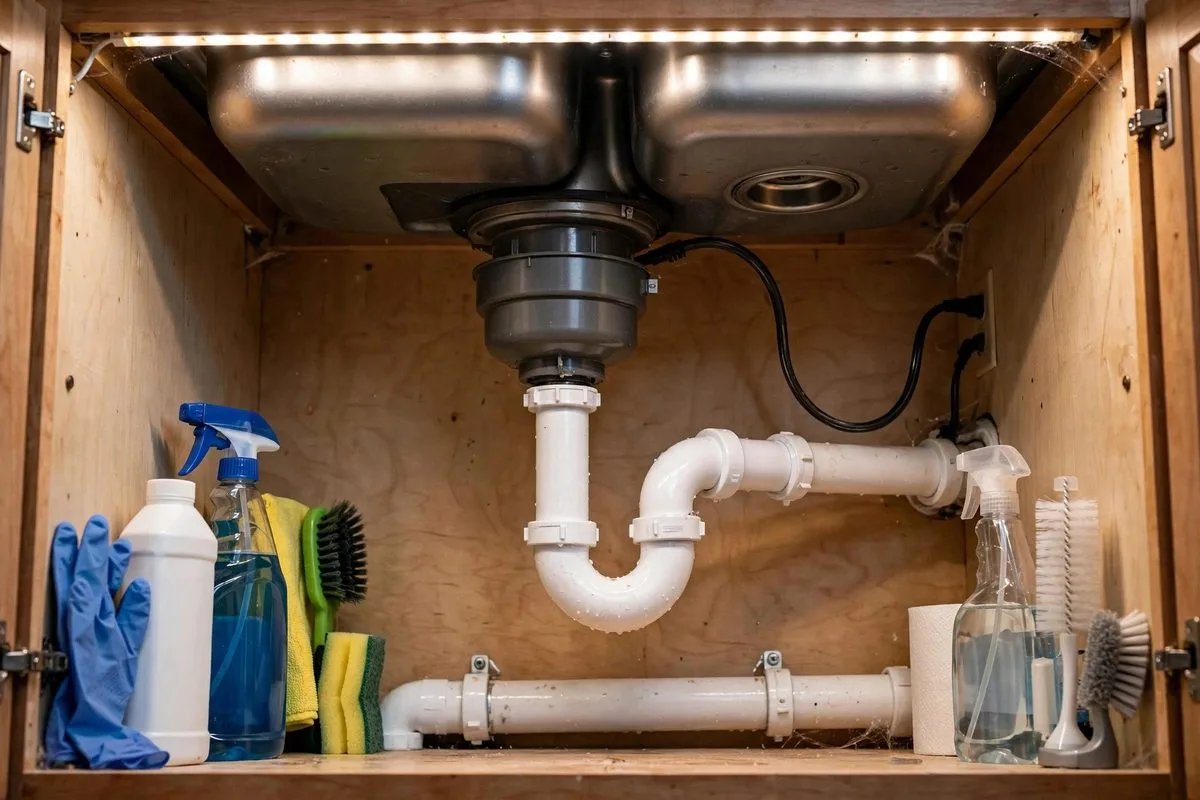
Your sink is already telling the technician where to look. If only one side of a double sink drains slowly, the restriction is usually close: the trap, the disposal discharge, or the short tailpiece. If both sides fill and drain together, the clog is past the point where the two sides join, in the branch line inside the wall.
A disposal that hums but does not grind is a separate clue. The motor is straining against something packed tight, and running it longer only heats the motor. Turn it off and leave it off. And if running the dishwasher pushes water up into the sink, note it, because that tells us the shared branch is restricted downstream of both fixtures.
Dishwasher and disposal backups: what the water is telling you
The dishwasher drains through the same branch as the sink, usually via the disposal or a tailpiece connection. When that branch narrows, the dishwasher pump pushes water the only way it can: up into the sink basin. Finding dirty water in the sink after a dishwasher cycle is one of the clearest signs the branch line needs attention.
Disposals cause their share of trouble too. They are built to grind, not to pump, so everything they grind still has to travel the branch line under its own flow. Stringy vegetables, egg shells, and large loads of peelings are the usual suspects. Small amounts with plenty of cold water behave better, but no disposal makes a narrow line wider.
If the trouble turns out to be deeper than the kitchen, for instance several fixtures backing up at once, that is a main drain line cleaning situation rather than a kitchen one, and we will tell you so on the call.
Clearing the branch line behind the wall
Once the trap and disposal are ruled out, the work moves to the branch line: the horizontal run inside the wall that carries the kitchen drain to the main stack. A cable with the right head breaks through the blockage and pulls the loosened material back. On a badly coated line, the first pass opens flow, and a second pass with a different head scrapes the walls.
When buildup is heavy, hydro jetting is the deeper clean: high-pressure water scours the pipe walls instead of just boring a hole through the clog. Not every line needs it, and the technician will say so. Either way, the line gets run with water afterward to confirm it drains the way it should.
If the bathroom has started gurgling or draining slowly too, mention it, because a kitchen problem that spreads is often a main-line problem wearing a kitchen disguise. Our bathroom drain cleaning page explains what those signs look like.
Keeping a kitchen sink drain clog from coming back: honest habits
No product or habit makes a drain uncloggable, but a few honest habits stretch the time between visits. Scrape plates into the trash before rinsing. Wipe greasy pans with a paper towel before washing. Run cold water when the disposal runs, and feed it small amounts instead of a full load of peelings at once.
What does not help: pouring hot water down the drain to melt grease. It melts the grease just far enough to re-harden deeper in the line, where it is harder to reach. Chemical drain cleaners are off the table entirely: they can harm pipes and they put the technician at risk when the line is opened. If a kitchen sink drain clog keeps returning despite good habits, the line itself needs a look, not another round of home remedies.
Dover homes and kitchen drains: what the tech expects to find
Dover housing tells the story of its kitchen drains. In the older borough core near the square, kitchens were built for a different era: original layouts, cast iron branch lines, and disposals added decades later that the old piping never anticipated. Those lines have had the better part of a century to narrow, and grease has used every year of it.
Out along the Carlisle Road corridor in Weigelstown, the post-war subdivisions brought double sinks, dishwashers, and longer branch runs through walls and crawl spaces. The pipe is newer, but the cooking is heavier: big family meals, holiday cooking, and disposals doing daily duty. In Davidsburg and the newer streets west of town, island sinks and long horizontal runs mean food waste travels further before it reaches the stack, and low spots in a long run collect sediment.
Cold snaps add their own wrinkle. A kitchen branch running through a cold wall or crawl space chills faster, and grease sets up harder in a cold line. We see the pattern every winter: the same slow sinks once the temperature drops. Wherever you are in Dover, we connect you with pros who handle drain cleaning in Dover Borough and drain cleaning in Davidsburg with techs who have seen your neighborhood kitchens before.
If the sink is standing full right now, do not wait for it to get worse. Get Dover help today and talk through what you are seeing with someone who clears these lines every day.
While you wait: before the tech arrives
Still standing in water? Call before it gets worse. A five-minute conversation is enough to tell whether this is a trap, a branch line, or something deeper.
Kitchen drain cleaning questions from Dover homeowners
A sink that clogs again within weeks usually has buildup coating the branch line, not a single blockage. Clearing the trap opens flow for a while, but the narrowed line catches debris again quickly. A camera check of the branch shows how far the coating goes and whether cabling or jetting is the right fix.
Yes. Liquid grease cools and plates the inside of the pipe, and every cooking session adds a layer. Hot water only pushes the problem deeper, where the grease re-hardens out of reach. Wiping pans and scraping plates before washing does more than any flush.
It can. A garbage disposal clog usually forms past the disposal itself, where ground food settles in the discharge line and hardens. The disposal grinds fine, but the branch line cannot carry the load. Small amounts with cold water behave better than a full load of peelings at once.
The dishwasher shares the sink's branch line. When that branch narrows, the dishwasher pump pushes water the only way it can: up into the basin. Dirty water in the sink after a cycle is one of the clearest signs the branch needs clearing.
Both clear the line, but neither can promise it will never clog again. Cabling bores through the blockage; jetting scours the walls. What keeps it clear longer is what goes down the drain afterward, and the technician will be straight with you about that.
They are mild maintenance products, not clog removers. Once water is standing in the sink, no enzyme or bacteria product will open the line. Save them for a clear drain, and call for the clog.
If one side of a double sink still drains, light use is fine. If both sides stand full or water backs up when the dishwasher runs, stop using it. Every gallon you add is a gallon the technician has to deal with.
It depends on where the blockage sits and how coated the line is. When you call, the technician can talk through what the visit usually involves for a kitchen line like yours. No two lines are identical, so we do not quote times blind.
Kitchen drain cleaning in Dover, PA, when the sink will not wait
Call Dover Drain Cleaning Co. at (717) 297-8227 for kitchen drain cleaning in Dover, PA. A local tech clears the line, checks the branch behind the wall, and explains the cause in plain words before leaving.
Calls answered 24/7